readAr
readAr
readAr

project description
project description
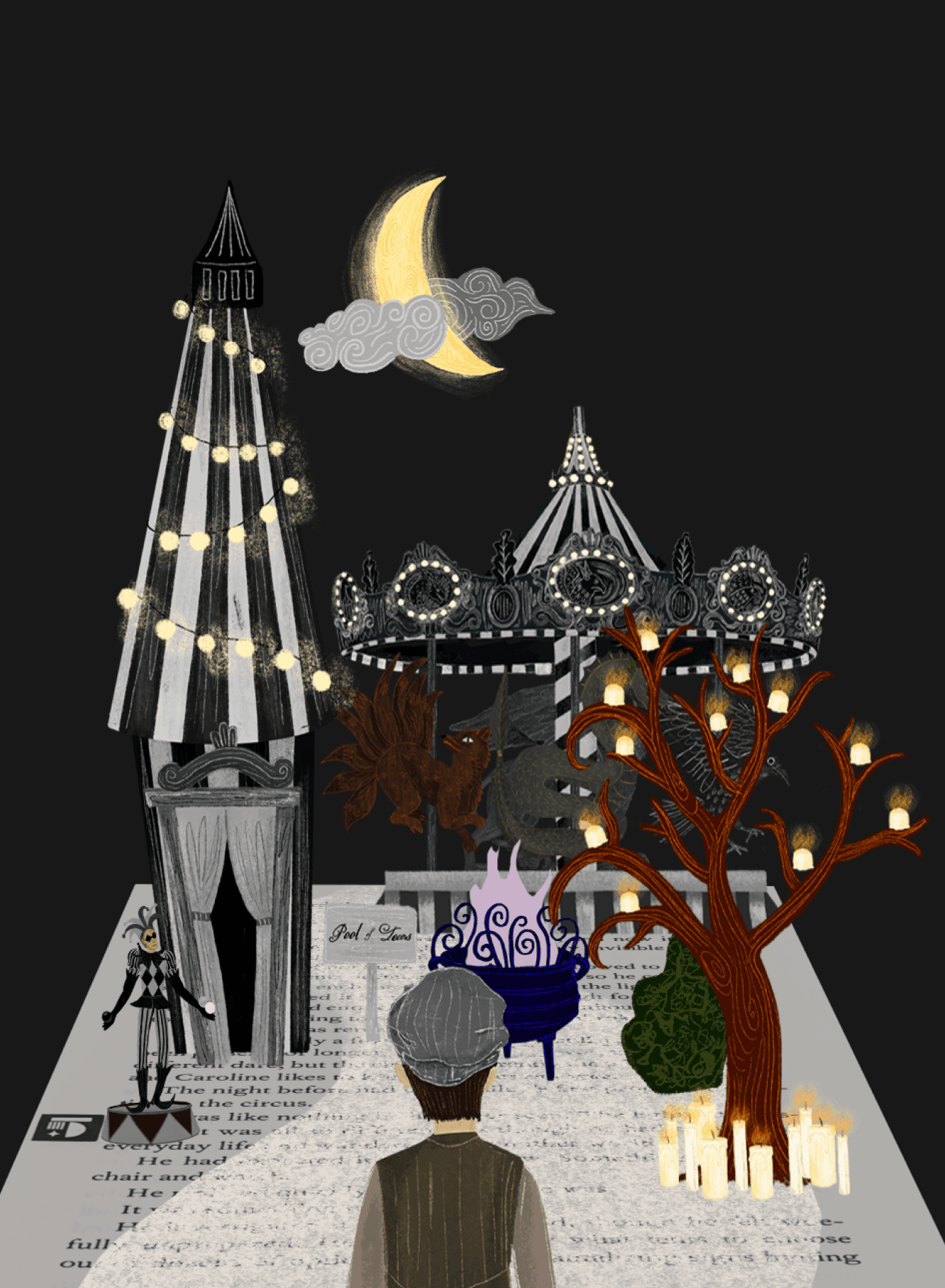
ReadAr is an augmented reality reading companion designed to make books more engaging and accessible for young readers who prefer visual media. The experience bridges the gap between traditional reading and digital interaction by using AR to bring story scenes to life, encouraging curiosity, imagination, and deeper immersion in reading.
As younger audiences spend more time consuming visual content, reading for leisure has declined. ReadAr reimagines how readers experience stories by transforming reading into a multi-sensory, interactive journey.
ReadAr is an augmented reality reading companion designed to make books more engaging and accessible for young readers who prefer visual media. The experience bridges the gap between traditional reading and digital interaction by using AR to bring story scenes to life, encouraging curiosity, imagination, and deeper immersion in reading.
As younger audiences spend more time consuming visual content, reading for leisure has declined. ReadAr reimagines how readers experience stories by transforming reading into a multi-sensory, interactive journey.
roles & responsibilities
roles & responsibilities
UX/UI Designer, Visual Designer
Competitive analysis, user research, journey mapping, illustration, motion design, UI design, and AR prototyping in Adobe Aero.
UX/UI Designer, Visual Designer
Competitive analysis, user research, journey mapping, illustration, motion design, UI design, and AR prototyping in Adobe Aero.
context
context
Academic project
Academic project
the problem
the problem
the problem
Today's younger audiences are spending significantly less time reading for pleasure. Visual content (television, gaming, social media) delivers narrative in immediate ways that text alone struggles to match. For many readers, books have simply become harder to choose — not because the desire to read disappears, but because the alternatives are faster, more visual, and immediately rewarding.
For some, the challenge runs deeper. Individuals with aphantasia, the inability to form mental images, find descriptive prose particularly difficult to engage with. Skimming replaces reading; meaning gets lost in the gap between words and visualization.
ReadAr was designed with both audiences in mind.
Today's younger audiences are spending significantly less time reading for pleasure. Visual content (television, gaming, social media) delivers narrative in immediate ways that text alone struggles to match. For many readers, books have simply become harder to choose — not because the desire to read disappears, but because the alternatives are faster, more visual, and immediately rewarding.
For some, the challenge runs deeper. Individuals with aphantasia, the inability to form mental images, find descriptive prose particularly difficult to engage with. Skimming replaces reading; meaning gets lost in the gap between words and visualization.
ReadAr was designed with both audiences in mind.
the opportunity
the opportunity
the opportunity
Reading builds empathy, focus, and imagination. But as attention shifts to visual media, many struggle to engage with stories, especially those who have difficulty forming mental images.
How might we reimagine the reading experience to make it immersive, visual, and inclusive?
Reading builds empathy, focus, and imagination. But as attention shifts to visual media, many struggle to engage with stories, especially those who have difficulty forming mental images.
How might we reimagine the reading experience to make it immersive, visual, and inclusive?
goals
goals
01 visualization
01 visualization
Combine the richness of reading with the immediacy of visual storytelling to help readers (especially those with aphantasia) better visualize scenes, characters, and settings.
Combine the richness of reading with the immediacy of visual storytelling to help readers (especially those with aphantasia) better visualize scenes, characters, and settings.
02 re-engagement
02 re-engagement
Use AR to transform reading into an active, immersive experience that gives readers a new reason to pick up a physical book.
Use AR to transform reading into an active, immersive experience that gives readers a new reason to pick up a physical book.
research & insights
research & insights
research & insights
I explored how AR and digital elements have been used to bring literature to life. Nearly every existing application is limited to children's books, graphic novels, or illustrated texts — formats that already have a visual component. There is almost no precedent for using AR to enhance traditional novels, which rely entirely on text and a reader's imagination. That gap is where the opportunity lives.


user personas
user personas
Astrid, 19, is a college student and a lapsed reader. Reading used to be one of her favorite pastimes, but it now feels hard to sustain. She struggles to picture scenes clearly and wants reading to feel as alive as the other media competing for her time.
Astrid, 19, is a college student and a lapsed reader. Reading used to be one of her favorite pastimes, but it now feels hard to sustain. She struggles to picture scenes clearly and wants reading to feel as alive as the other media competing for her time.
Emily, 27, is an adult reader with aphantasia. Descriptive scenes produce no mental imagery for her — she often skims them and enjoy them in their entirety.
Emily, 27, is an adult reader with aphantasia. Descriptive scenes produce no mental imagery for her — she often skims them and enjoy them in their entirety.
user journey
user journey
01 awareness
01 awareness
Astrid visits a bookstore and discovers a dedicated section of AR-enabled novels. Intrigued, she picks one up and downloads the ReadAr app before she’s left the store.
Astrid visits a bookstore and discovers a dedicated section of AR-enabled novels. Intrigued, she picks one up and downloads the ReadAr app before she’s left the store.
02 discovery
02 discovery
While reading at home, she notices an AR marker embedded on the page. She opens the app.
While reading at home, she notices an AR marker embedded on the page. She opens the app.
03 experience
03 experience
She scans the marker and the scene comes to life on the page: illustrations animate, narration plays, background sound fills the moment. She can replay it, pause, and move at her own pace.
She scans the marker and the scene comes to life on the page: illustrations animate, narration plays, background sound fills the moment. She can replay it, pause, and move at her own pace.
04 motivation
04 motivation
Finishing the book, she browses more AR-enabled titles in the app. The experience has changed how she thinks about reading; She's curious about what the next novel will look like.
Finishing the book, she browses more AR-enabled titles in the app. The experience has changed how she thinks about reading; She's curious about what the next novel will look like.
the design
the design
the design


proof of concept:
The Night Circus
proof of concept:
The Night Circus
ReadAr's first AR experience is built around Erin Morgenstern's The Night Circus, a fantasy set in a mysterious Victorian circus, and an ideal first proof of concept.
Palette: black, white, and gray
Visual keywords: whimsical, dark gothic, beguiling, dramatic
Each novel in ReadAr will have a visual identity tailored entirely to its story. The AR scene inherits the book's own visual language rather than imposing a generic ReadAr aesthetic.
ReadAr's first AR experience is built around Erin Morgenstern's The Night Circus, a fantasy set in a mysterious Victorian circus, and an ideal first proof of concept.
Palette: black, white, and gray
Visual keywords: whimsical, dark gothic, beguiling, dramatic
Each novel in ReadAr will have a visual identity tailored entirely to its story. The AR scene inherits the book's own visual language rather than imposing a generic ReadAr aesthetic.

illustrations & iterations
illustrations & iterations
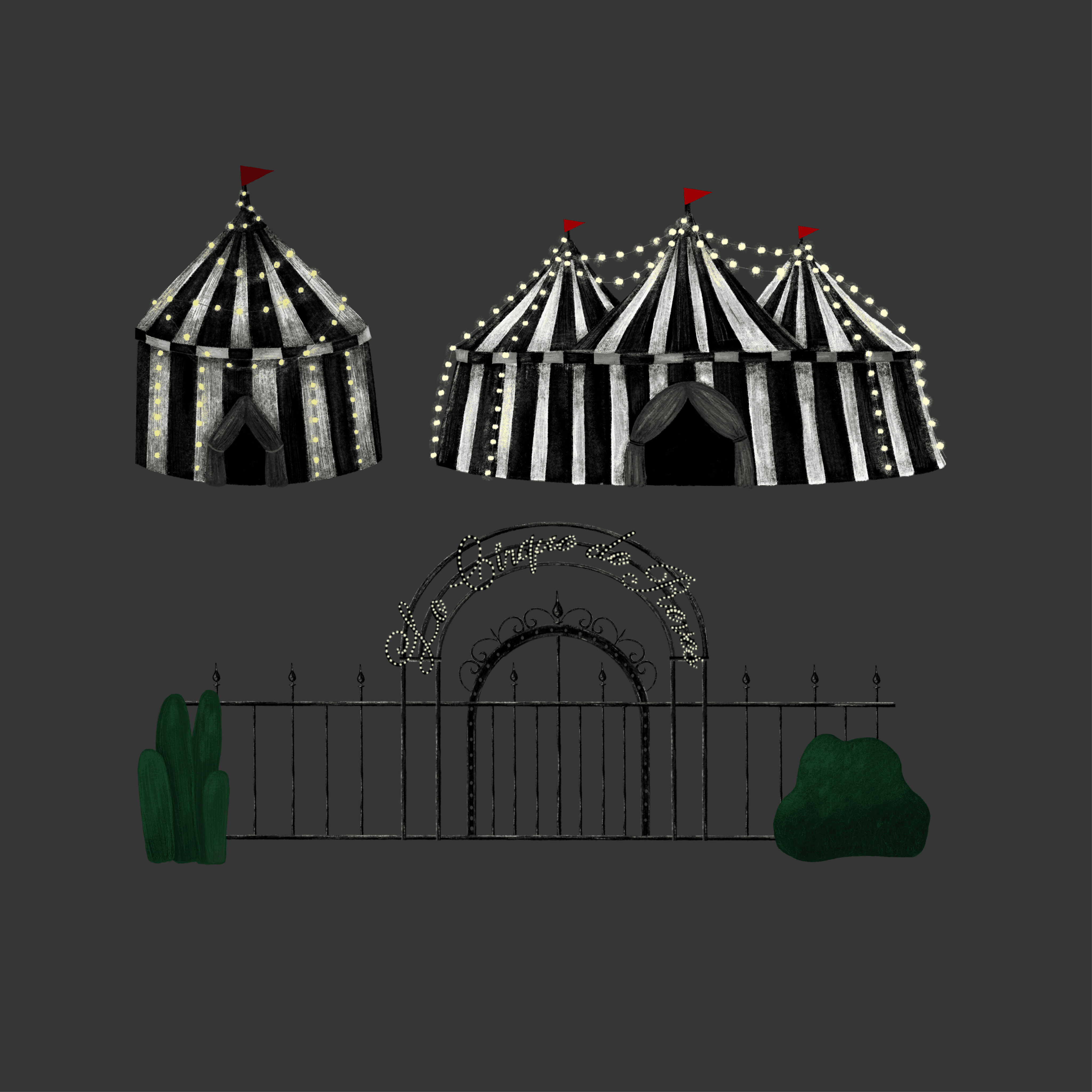
During exploration, I iterated on layout, composition, and placement to find an arrangement that immersed the reader into the scene.
Illustrations were designed to match each novel's own aesthetic language, so the AR scene feels like part of the story rather than a layer on top of it.




interactions
interactions
Once the AR scene loads, a Start button initiates the animation and narration. The scene doesn't autoplay, giving readers control over their own pace. Any scene can be replayed at any time which is particularly useful for readers with aphantasia, who may need to anchor a scene visually before moving forward.
Once the AR scene loads, a Start button initiates the animation and narration. The scene doesn't autoplay, giving readers control over their own pace. Any scene can be replayed at any time which is particularly useful for readers with aphantasia, who may need to anchor a scene visually before moving forward.


app experience

getting started
getting started
After downloading ReadAr, Astrid scans her book cover to add it to her collection. The book she bought is the onboarding to encourage immediate engagement with AR content.
After downloading ReadAr, Astrid scans her book cover to add it to her collection. The book she bought is the onboarding to encourage immediate engagement with AR content.

Visualizing the Scene
Visualizing the Scene
When she reaches an AR marker, she selects the book in the app and scans.
The scene loads directly on the page in front of her, so she never has to put the book down.
When she reaches an AR marker, she selects the book in the app and scans.
The scene loads directly on the page in front of her, so she never has to put the book down.
Reading More
Reading More
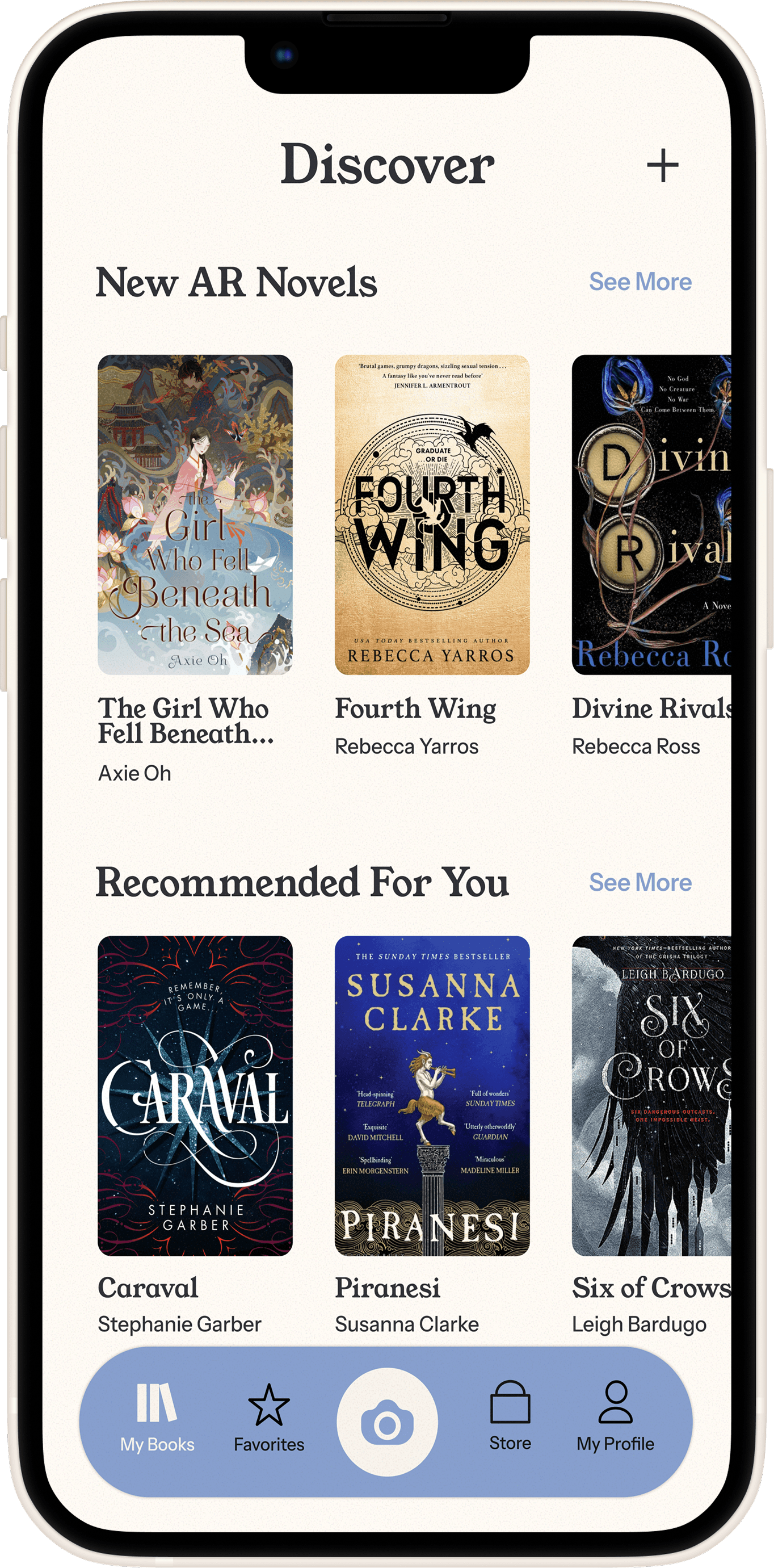
Once Astrid finishes a book, she browses other AR-enabled novels in the app. Each new title brings a new visual world — a different illustration style, palette, and AR identity tailored to that story.
Once Astrid finishes a book, she browses other AR-enabled novels in the app. Each new title brings a new visual world — a different illustration style, palette, and AR identity tailored to that story.
reflection
reflection
reflection
This project pushed me into unfamiliar territory on two fronts. Designing for AR was a new medium. While I was able to prototype in Adobe Aero, the technology itself was challenging to work with. Testing whether the experience could work practically — triggering AR scenes through markers embedded in a physical book — raised questions that were difficult to fully resolve at the concept stage. It kept me thinking critically about whether every decision would hold up in a real reading environment.
The illustration work presented its own challenge. Creating scenes intended for a 3D augmented environment — where a user is looking through a phone at a physical page — required thinking about composition differently than I normally would. I kept asking whether these choices would lead to something that felt genuinely immersive or just decorative.
This project pushed me into unfamiliar territory on two fronts. Designing for AR was a new medium. While I was able to prototype in Adobe Aero, the technology itself was challenging to work with. Testing whether the experience could work practically — triggering AR scenes through markers embedded in a physical book — raised questions that were difficult to fully resolve at the concept stage. It kept me thinking critically about whether every decision would hold up in a real reading environment.
The illustration work presented its own challenge. Creating scenes intended for a 3D augmented environment — where a user is looking through a phone at a physical page — required thinking about composition differently than I normally would. I kept asking whether these choices would lead to something that felt genuinely immersive or just decorative.